
The Truth About Parenting No One Wants to Admit
May 06, 2026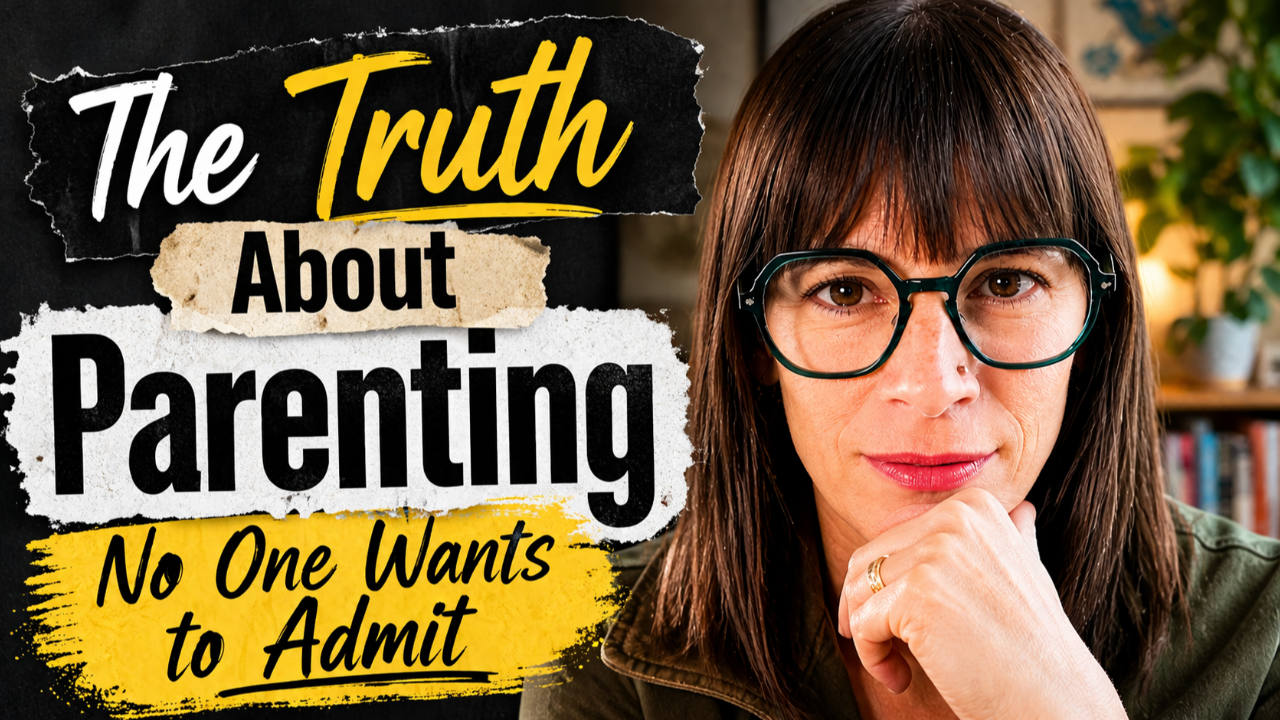
Let’s start with something most parenting advice will never say out loud:
You ARE hurting your kids.
I am too.
Every parent is.
And before your brain jumps in to argue with that or soften it or explain it away—just notice that reaction.
Because underneath it is something a lot of parents don’t want to feel:
“What if I’m the problem?”
The Moment You Start Seeing It
If you’ve done any kind of self-reflection—through the Enneagram, coaching, therapy, or just being honest with yourself—you’ve probably had a moment where something clicks.
Not in a dramatic way.
In a quiet, uncomfortable way.
You notice:
- The tone you use when you’re stressed
- The impatience that shows up faster than you’d like
- The way your kid reacts to you… and you recognize it
And the thought lands:
“Oh. This isn’t just about them. This is me too.”
That moment is everything.
And it’s also where most people either turn away… or go straight into shame.
What Most Parents Do Next
When that awareness hits, there are two really common responses:
1. Defend
You explain it away.
You justify it.
You tell yourself (or your kid) why it made sense.
2. Collapse
You go straight to:
- “I’m messing them up”
- “I’ve already done damage”
- “I need to fix this immediately”
Both are completely human.
Neither one actually helps your kid.
The Part That Feels Like a Gut Punch
You are not going to raise your child without hurting them.
Not because you’re doing it wrong.
Because you’re human.
Your personality, your patterns, your stress responses, your unfinished emotional stuff—
All of it comes with you into your parenting.
There is no version of parenting where you somehow leave yourself out of it.
What “Hurting Your Kids” Actually Means
This isn’t about catastrophic harm.
It’s about impact.
And that impact depends on how you’re wired.
For example:
- If you tend toward high standards or criticism → your child may feel like they’re never quite enough
- If you over-help or over-give → your child may feel pressure to meet your emotional needs
- If you carry anxiety → your child may start to experience the world as unsafe
- If you withdraw when overwhelmed → your child may feel alone, even when you’re right there
Different pattern.
Same truth:
You leave an imprint.
Why This Isn’t Actually the Problem
Here’s the shift that changes everything:
The goal is not to eliminate your impact.
That’s impossible.
The goal is to become aware of it.
Because awareness changes how your impact lands.
When you’re aware:
- You catch yourself sooner
- You react less automatically
- You can stay present instead of escalating
- You can own what happened without defensiveness
That’s what actually shifts the relationship.
What Real Repair Looks Like
This is where most parents get tripped up.
Because repair turns into:
- Over-explaining
- Over-apologizing
- Or needing your child to reassure you that everything is okay
That’s not repair.
That’s you trying to feel better.
Real repair is much simpler.
And much harder.
It sounds like:
“Yeah. That wasn’t okay. And I see it now.”
No justification.
No explanation.
No emotional outsourcing.
Just truth.
And the willingness to stay there.
Why Self-Awareness Matters More Than “Better Parenting”
A lot of parenting advice focuses on strategies.
What to say.
How to respond.
How to get your kid to behave differently.
But if you’re still operating from the same unconscious patterns…
Those strategies only go so far.
The real shift happens when you start paying attention to:
- What’s happening inside you
- What you’re reacting to
- What your patterns are trying to protect you from
That’s the work.
And it’s slower than people want it to be.
But it’s also what actually sticks.
If This Is Hitting a Nerve
Good.
Not because it feels good.
But because it means you’re seeing something real.
You don’t need to fix everything today.
You don’t need to undo the past.
You don’t need your kid to tell you it’s okay.
You just need to stay in the truth long enough for something to shift.
A Question to Sit With
Where are you reacting from pattern…
instead of responding from awareness?
Start there.
That’s enough.