
How The Anatomy of Peace Can Change the Way You Handle Conflict at Home
Jun 24, 2026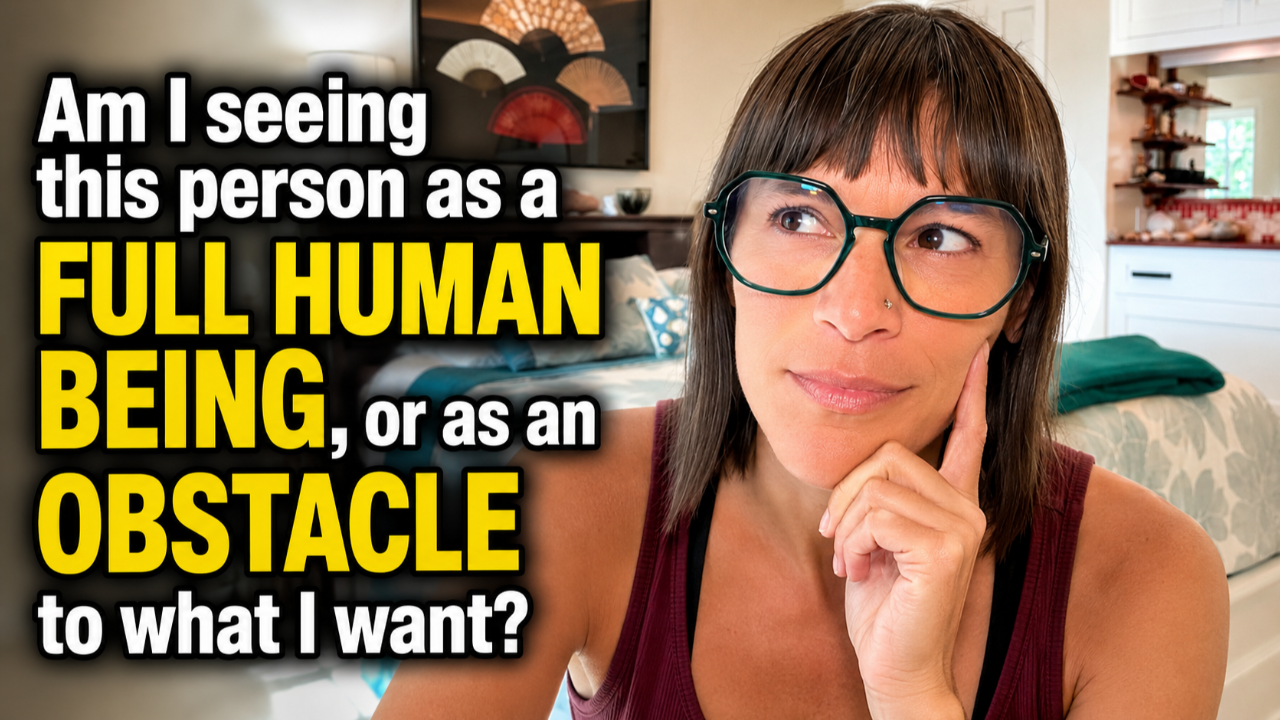
Sometimes your kid throws their backpack on the floor, kicks their shoes into another zip code, and walks away like they do not live in a society.
And listen. Is that annoying? Yes.
Is it also possible that the backpack is not really the whole problem?
Also yes. Sorry. I know.
One of the ideas I love from The Anatomy of Peace is this: conflict is not only about what the other person is doing. It is also about how we are seeing them.
That is a simple sentence. It is also a deeply inconvenient one.
Because when we are in it — when the house is messy, the kid is rude, the partner is oblivious, the co-parent is making us want to become a person we do not recognize — we are usually not thinking, “Ah, yes, I wonder how my way of seeing this person is contributing to this dynamic.”
We are thinking, “Could everyone please stop being ridiculous for five consecutive minutes?”
Fair.
But here is where the work begins.
Are you seeing your child as a person or as an obstacle?
When we are frustrated, overwhelmed, or convinced we are the only ones holding the entire ecosystem of the family together, it becomes very easy to stop seeing the person in front of us as a full human being.
Instead, we see them as an obstacle.
The child who dropped the backpack is now the obstacle to a clean house.
The teenager with the attitude is now the obstacle to a peaceful evening.
The partner who forgot the thing again is now the obstacle to you feeling supported.
And once someone becomes an obstacle in our mind, our energy changes. Our tone changes. Our face changes. The whole vibe shifts.
Then we wonder why the conversation goes sideways.
This is what The Anatomy of Peace calls a heart at war. Not dramatic war. Not necessarily yelling, door-slamming, reality-show-level chaos. Sometimes a heart at war looks very calm on the outside.
It just means that internally, we are no longer seeing the other person as a person.
We are seeing them as a problem to manage.
A heart at peace does not mean having no boundaries
Let’s clear this up right away, because otherwise someone’s nervous system is going to start throwing clipboards.
A heart at peace does not mean you let your child do whatever they want.
It does not mean you stop having expectations.
It does not mean you become so soft and understanding that everyone walks all over you while you whisper, “I honor your journey,” into the void.
Nope.
A heart at peace means that before you correct, direct, teach, or set a boundary, you remember that the person in front of you is a human being.
A whole person.
A person with hopes, fears, needs, stress, confusion, nervous system patterns, and their own little box of stories they are living inside.
Even when they are being wildly annoying.
Maybe especially then.
Why parents get stuck in correction mode
Most parents are spending a huge amount of energy trying to get people to change.
Pick that up.
Stop talking like that.
Do your homework.
Put your shoes away.
Please, for the love of all things holy, brush your teeth.
And yes, kids need guidance. They need structure. They need boundaries. They need correction sometimes.
But if the whole relationship becomes correction, everyone starts to feel terrible.
This is where the pyramid of influence from The Anatomy of Peace becomes so useful. The basic idea is that if we want to influence someone, the foundation is not correction. The foundation is our way of being.
Then comes relationship.
Then communication.
Then teaching.
Then correction.
But most of us flip the whole thing upside down and try to live at the tippy-top of the pyramid all day long.
No wonder everyone is exhausted.
The Enneagram layer: what box are you in?
This is where the Enneagram gets so useful, because each of us has a particular kind of box we tend to climb into.
For some people, the box is being right.
For others, it is being helpful.
Or competent.
Or safe.
Or strong.
Or easygoing.
The shape of the box may be different, but the effect is often the same: we stop seeing clearly.
We start seeing through the lens of our old patterns, old fears, old strategies, and old self-protection.
And then we call it truth.
Rude little plot twist, isn’t it?
The work is not to shame ourselves for having a box. We all have one. The work is to notice when we are in it so we can choose something different.
The real question underneath conflict
The question is not, “How do I make this person change?”
That is usually where we start.
How do I make my kid listen?
How do I make my partner understand?
How do I make this person stop doing the thing that makes me want to launch myself into the lake?
But a better question is:
How can I show up to this connection in a way that makes growth more possible for both of us?
That is a very different question.
It moves us out of control and into self-leadership.
It brings us back to our own way of being.
It gives us a way forward that does not require us to abandon boundaries or bulldoze the people we love.
This is the work of connection
This is also exactly why this year’s October retreat is centered around connection.
Because this kind of work is not always something you can just think your way through in the carpool line.
Sometimes you need space.
You need support.
You need a room where you can tell the truth without being judged.
You need enough quiet to notice the box you are in and enough compassion to step out of it without making yourself the villain.
The retreat is a place to work with these ideas slowly and deeply — through the Enneagram, communication tools, self-awareness, and the kind of honest reflection that helps you come back to yourself and your relationships with a little more heart.
Not perfect. Not magically conflict-free.
Just clearer.
More grounded.
More connected.
And honestly, that is plenty powerful.
A question to sit with
Think of one relationship in your life that feels stuck.
Your child. Your partner. A friend. A parent. A co-worker. Maybe yourself.
Now ask:
Am I seeing this person as a full human being, or as an obstacle to what I want?
No shame. No spiral. No need to make a ten-part self-improvement plan.
Just notice.
That noticing may be the first little crack in the box.
And sometimes that is exactly where peace starts.
Want to go deeper?
Listen to the full podcast episode here: https://www.annkaplanparentcoach.com/podcast
And if this is the kind of work you are ready to do in a deeper, more spacious way, the October retreat may be exactly where you belong.
Learn more about the retreat here: https://www.annkaplanparentcoach.com/fallretreat