
You’re Not Your Enneagram Type (And That Changes Everything)
Apr 15, 2026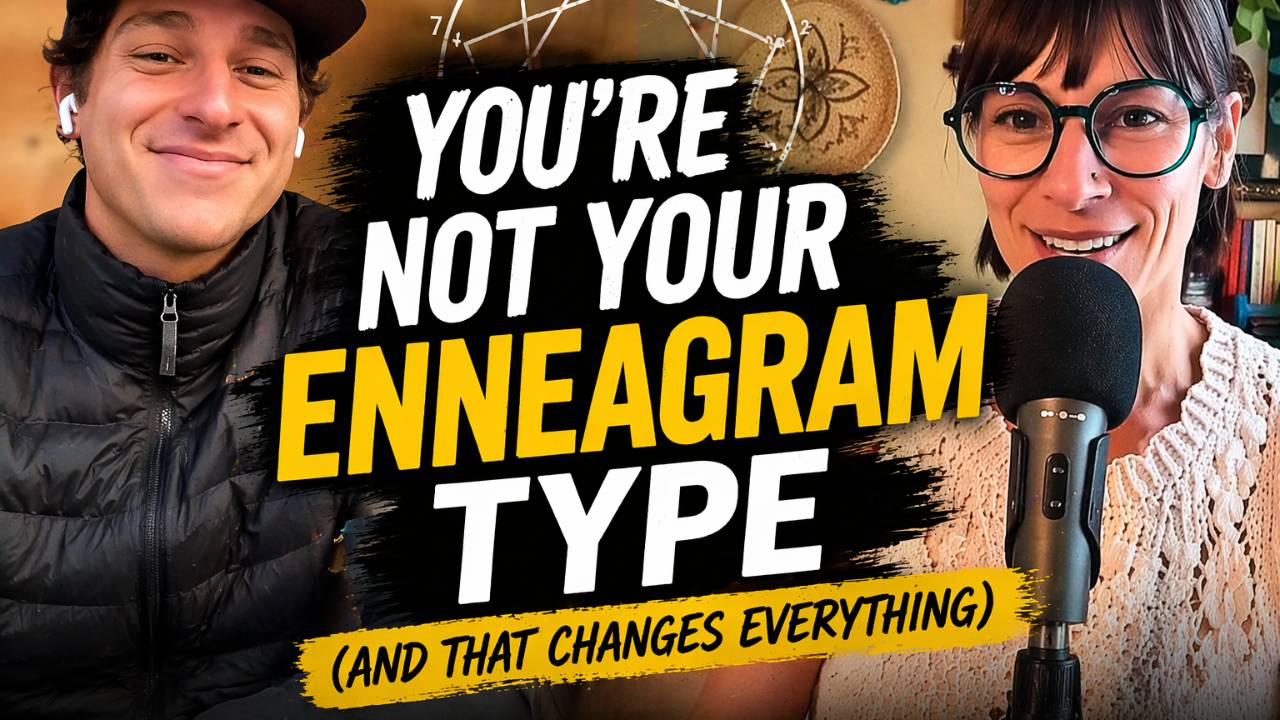
Most people come to the Enneagram asking one question:
“What type am I?”
And I get it.
There’s something really relieving about finding a description that makes you feel seen.
But here’s the part that almost nobody tells you:
That’s not actually the point.
I sat down this week with my oldest son, Elijah, and we ended up talking about the Enneagram in a way I don’t usually hear it talked about.
Not as a label.
Not as a personality quiz.
But as a tool that shows you something much more uncomfortable—and much more useful:
What you’re stuck in.
The version of you that shows up when things aren’t working
When Elijah first learned the Enneagram, he was a teenager in a really hard season.
Lots of conflict.
Some behavior he wasn’t proud of.
A lot of internal noise.
And like a lot of people, he landed on a type that fit… but wasn’t actually him.
And here’s what’s interesting:
It still helped.
Because even though it wasn’t “accurate,” it gave him language for what was happening inside him.
That’s the part people miss.
The Enneagram will meet you wherever you are—even if where you are is not who you actually are.
Why you might be getting your type “wrong”
When you’re dysregulated—overwhelmed, reactive, checked out, anxious, controlling, avoidant—
you don’t look like your true self.
You look like your coping.
And coping looks surprisingly similar across types.
Avoidance.
Control.
Escapism.
Reactivity.
Self-sabotage.
When you’re in that place, it’s very easy to read a description and think:
“That’s me.”
But what you’re often seeing…
isn’t your core.
It’s your strategy for getting through something.
The part that changes everything
At one point in the conversation, Elijah said something that I wish more people understood:
The Enneagram doesn’t tell you who you are.
It shows you how you’re navigating.
That distinction matters.
Because if you think your type is your identity, you’ll either:
- cling to it
- defend it
- or reject it entirely
But if you understand it as a pattern…
Now you have something you can actually work with.
The moment it clicked for him
When Elijah finally recognized his actual type, it didn’t feel like a big breakthrough.
It felt… obvious.
Almost embarrassing.
Because he had read it before.
But he couldn’t see himself in it earlier—not because it wasn’t true,
but because he didn’t have enough distance from his own patterns.
He thought:
“I can’t be this type… because I’m not a good person.”
And ironically, that belief was the clearest indicator of what was actually true.
This is where parents get tripped up
If you’re a parent, this matters even more.
Because when your kid is struggling, you’re not seeing their personality.
You’re seeing:
- their stress
- their dysregulation
- their attempt to cope
And if you take that at face value, you’ll respond to the behavior…
instead of understanding what’s underneath it.
The Enneagram, used well, doesn’t box your kid in.
It softens your view of them.
It helps you see:
“Oh… this isn’t who they are. This is what’s happening for them.”
Why this work can feel frustrating
You can understand all of this.
You can see your patterns.
You can name them.
You can even predict them.
And still… do the same thing.
That’s not failure.
That’s actually how this works.
Awareness doesn’t immediately change behavior.
It creates the space where change can happen.
So what do you actually do with this?
Instead of asking:
“What type am I?”
Try asking:
- What do I do when I feel uncomfortable?
- What am I trying to avoid right now?
- What feels so true about me that I’ve never questioned it?
That’s where the Enneagram actually becomes useful.
If this hit a little too close to home…
If you’re reading this and thinking:
“Yeah… that’s me. And I don’t know what to do with it.”
That’s exactly the work.
This isn’t about figuring yourself out once and for all.
It’s about learning how to see yourself more clearly
without immediately trying to fix or defend what you see.
Want to go deeper?
If you’re curious about the Enneagram—but in a way that actually applies to your life, your parenting, and your relationships—you don’t need more information.
You need the right lens.
That’s exactly what I teach.
You can:
- Join me for an Enneagram workshop
- Explore coaching
- Or just start paying attention to your patterns with a little more honesty
No pressure. No rush.
Just a different way of seeing what’s already there.
And if you want to learn more, listen to my latest podcast HERE