
Enneagram Rejection Types: Why 2s, 5s and 8s Refuse Help
Nov 25, 2026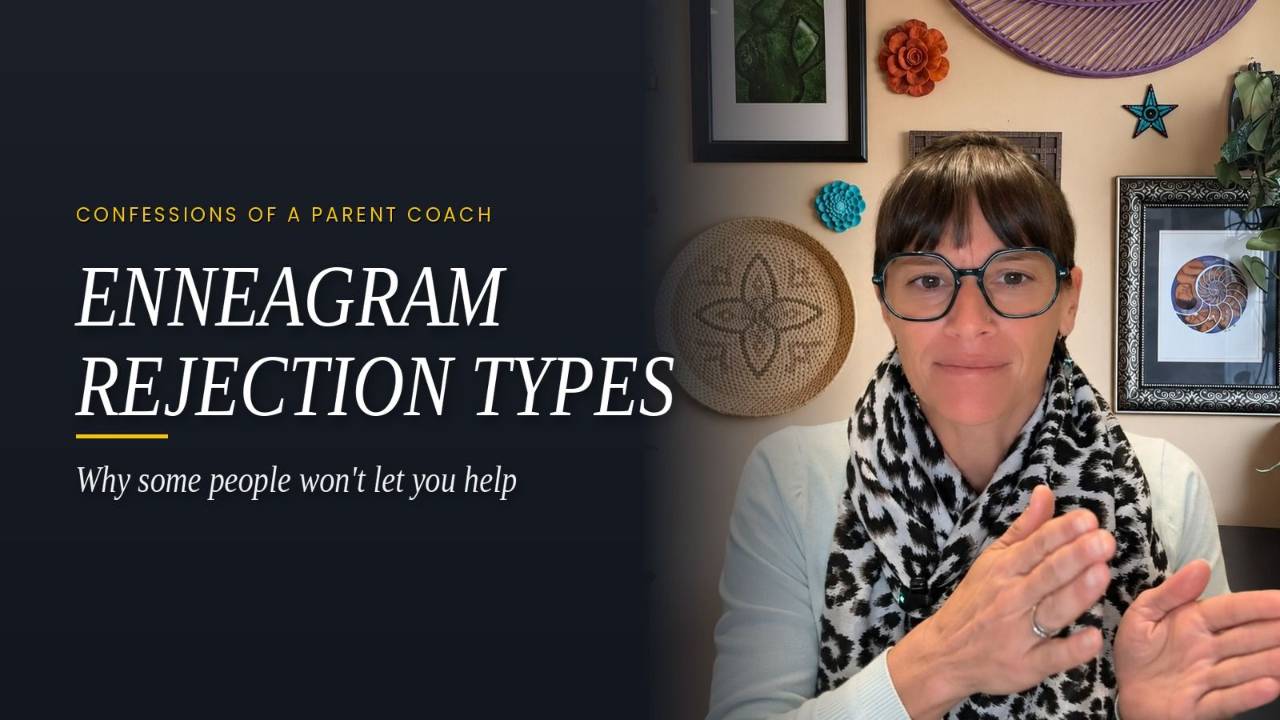
A few years ago my husband Mike's stepmom developed dementia. Mike was her only family in the United States, she lived in Maine, we live in Colorado, and the logistics alone were enormous. I assumed we'd walk into it together, hand in hand, the way you do when you're married. That is not what happened.
Mike didn't want my help. He didn't want my input, he didn't want to talk about it, and he didn't even want to delegate a single task to me. He carried the whole thing alone, for years. I was devastated, and honestly it made me question our marriage and myself. Am I a terrible partner? Am I too controlling? Why won't the best listener on planet Earth talk to me?
It took learning about object relations theory (and the frustration types and attachment types that go with it) for me to understand that Mike wasn't rejecting me. He was doing what rejection types do.
What makes someone a rejection type?
Every baby has needs that don't get met instantly. The room is drafty, lunch is 15 minutes away, Mom runs to the bathroom when you smile at her. That's not a failure of parenting. It's how personality forms.
Rejection types, the Enneagram 2, 5 and 8, read those ordinary misses as rejection. And because they never want to feel that again, they make a deal with themselves: if needing this got me rejected, I'll stop needing it. Then they reject anything from the outside world that points at the need they've cut off. What's left is the one part of themselves they lead with, and they put it forward hard.
Think of a clam in a tide pool. The good water might be lovely, but the impurities feel so dangerous that the clam slams its shell and refuses water altogether. When something does slip in, it lands like a splinter, and the clam works very hard to get it out.
The 8: so strong nothing can hurt
The 8 cuts off vulnerability and uncertainty and leads with strength, will and action. My mom is an 8. She will happily talk dinner plans and holiday dates all day. Anything "wishy-washy, loosey-goosey" and she is out. The 8's growth path is simple, not easy: let your guard down, let people see you struggle, and tell someone you're not doing well without blaming anyone.
The 2: the helper who won't be helped
The 2 cuts off going out into the world for itself and leads with a huge heart. Twos are often the warmest people you know, which is why "rejection type" sounds wrong at first. What the 2 is protecting: an image of being selfless and needless. When you offer help, you're pointing at the exact part of them they've decided doesn't exist. That's why Mike couldn't let me in. Asking him to include me was asking him to take down walls he'd spent his whole life building.
The 5: the brain that never needs anyone
The 5 cuts off heart and body and leads with the mind. My dad is a 5, and if the sheep do it one way, he does it the other (we were a Betamax family, obviously). Fives fear being stupid or unprepared, so they stockpile knowledge. Their growth path is to be ignorant and curious on purpose. My dad hates charades for exactly this reason.
What to say instead
You can't argue a rejection type into needing you. What works is meeting them on the ground they can stand on, and leaving the door open.
To a helper (2): "I could really use your help with this." Let them give. Later, try: "You don't have to earn me. I'm here either way."
To a know-it-all (5): "Will you show me how you'd do it?" When my dad and I laid the flooring in my Michigan basement and I just followed his lead, he was happy as a clam.
To a rock (8): "What's the plan? Tell me where you want me."
And if you're the rejection type in your house, try saying one sentence this week: "I'm actually not okay today." Then don't explain it away.
Listen to the full episode
In the full episode I also share big news about the group becoming the Collective, plus the growth path for all three types.
FAQ
What is an Enneagram rejection type?
Types 2, 5 and 8. When an early need went unmet, they read the miss as rejection and stopped needing that thing. What's left is the center they lead with: the 8's strength, the 2's heart, the 5's mind.
Why won't my partner accept help?
If they're a rejection type, your offer points straight at a need they've spent their life denying. It isn't a verdict on you. Meeting them on their comfortable ground usually works better than pushing.
Did I do this to my kid?
No. Every baby has needs that aren't met instantly. Those ordinary misses are part of how personality forms, not proof you failed.
Where to start this week
Notice one person in your life who won't take help, and instead of offering again, ask them for theirs. Watch what softens. Then notice where you do the same thing.
This is exactly the kind of thing we'll work on together in the Collective, my new coaching community launching the first week of January.
Learn about the Collective → www.annkaplanparentcoach.com/thecollective
See you inside, and go easy on the clams in your life.
Ann